USP 795, 797 & 800: What the Latest Chapter Revisions Mean for Your Compounding Space
USP 795, 797, and 800 set the rules for how pharmacies and health systems compound medications safely, and for how they contain hazardous drugs while doing it. Here is what changed, and what it means if you are planning a new enclosure or a cleanroom upgrade.
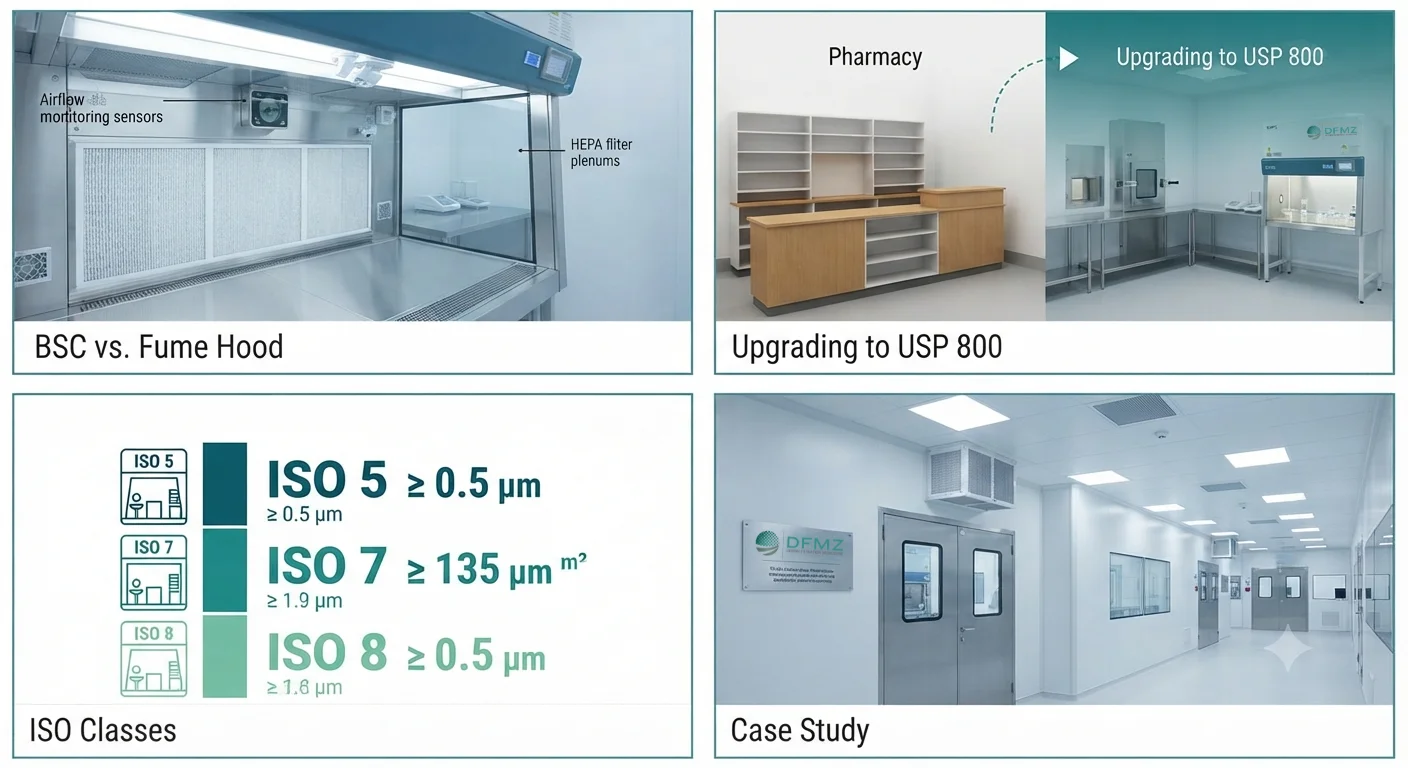
If your facility compounds medications, USP 795, 797, and 800 are probably already shaping how your space is built, staffed, and monitored. The three chapters work together: 795 covers non-sterile compounding, 797 covers sterile compounding, and 800 governs how hazardous drugs are handled regardless of which of the first two applies. A recent round of revisions to 795 and 797 tightened up facility design, engineering control, and documentation expectations across the board. Because hazardous drug work so often happens inside the same rooms and workflows, those changes ripple straight into USP 800 compliance as well.
For teams evaluating a new biological safety cabinet, planning a cleanroom build-out, or trying to figure out whether an existing enclosure still meets the bar, understanding how these three chapters fit together is the first step.
What Each Chapter Actually Covers
USP 795: Non-Sterile Compounding
USP 795 governs the preparation of non-sterile compounded medications. It sets expectations for how compounding areas are designed and maintained, including cleanable surfaces, proper separation of activities, documented personnel training, and defined beyond-use dates (BUDs) that dictate how long a preparation can be stored before it has to be used or discarded.
USP 797: Sterile Compounding
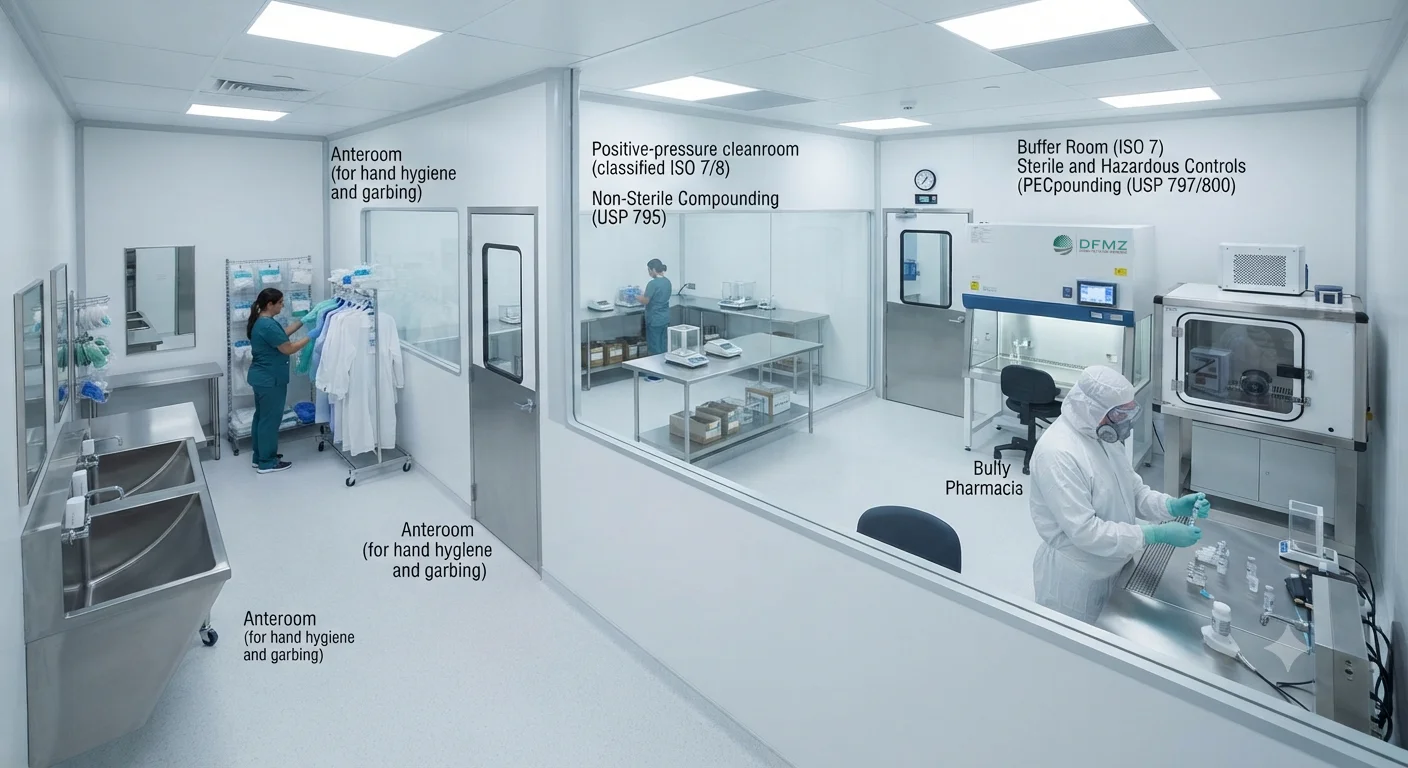
USP 797 is the more demanding of the two, given the risk profile of injectable and ophthalmic preparations. It defines cleanroom classifications by ISO air cleanliness level, sets requirements for primary engineering controls like biological safety cabinets and laminar airflow workbenches, and lays out detailed personnel qualification, garbing, and aseptic technique standards.
USP 800: Handling of Hazardous Drugs
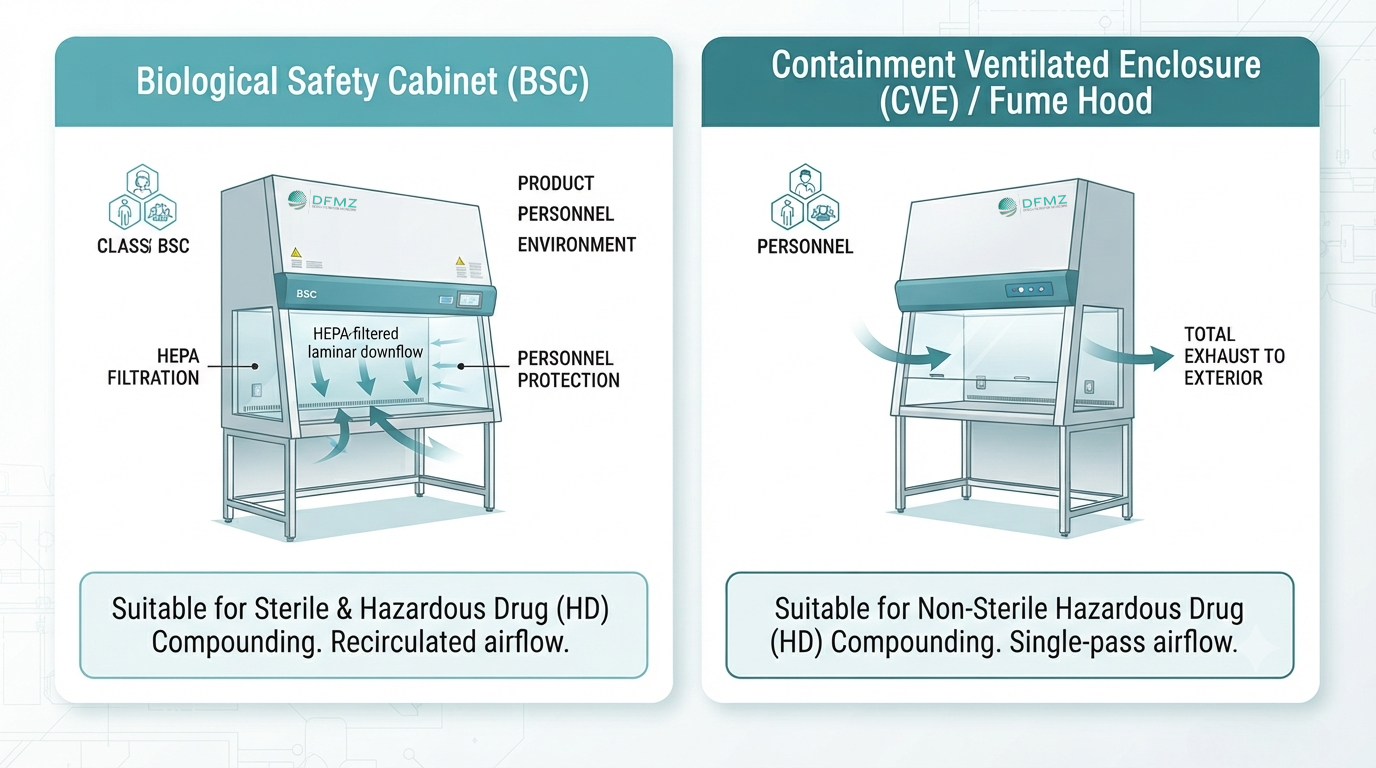
USP 800 exists to protect the people handling hazardous drugs and the environments around them, whether the drug in question is sterile or not. It's enforceable in a way 795 and 797 historically haven't been, and it layers additional containment, engineering control, and workflow requirements on top of whatever 795 or 797 already requires for that space. In practice, this is where a facility's choice of enclosure, whether a Class II biological safety cabinet, a containment fume hood, or a purpose-built ventilated enclosure, becomes the difference between a compliant room and an expensive redesign.
What Changed in the Revised Chapters
USP 795: Tighter Rules, Less Guesswork
The updated chapter replaces a lot of professional judgment around beyond-use dating with defined limits tied to dosage form and documented conditions. As a result, facilities without their own stability data are now working with shorter default windows. Non-sterile compounding areas also need clearer physical separation from incompatible activities, cleanable construction, and controlled conditions, even though they still fall short of requiring full cleanroom classification. Personnel training and competency now have to be documented and available on demand, not just assumed.
USP 797: A More Prescriptive Standard
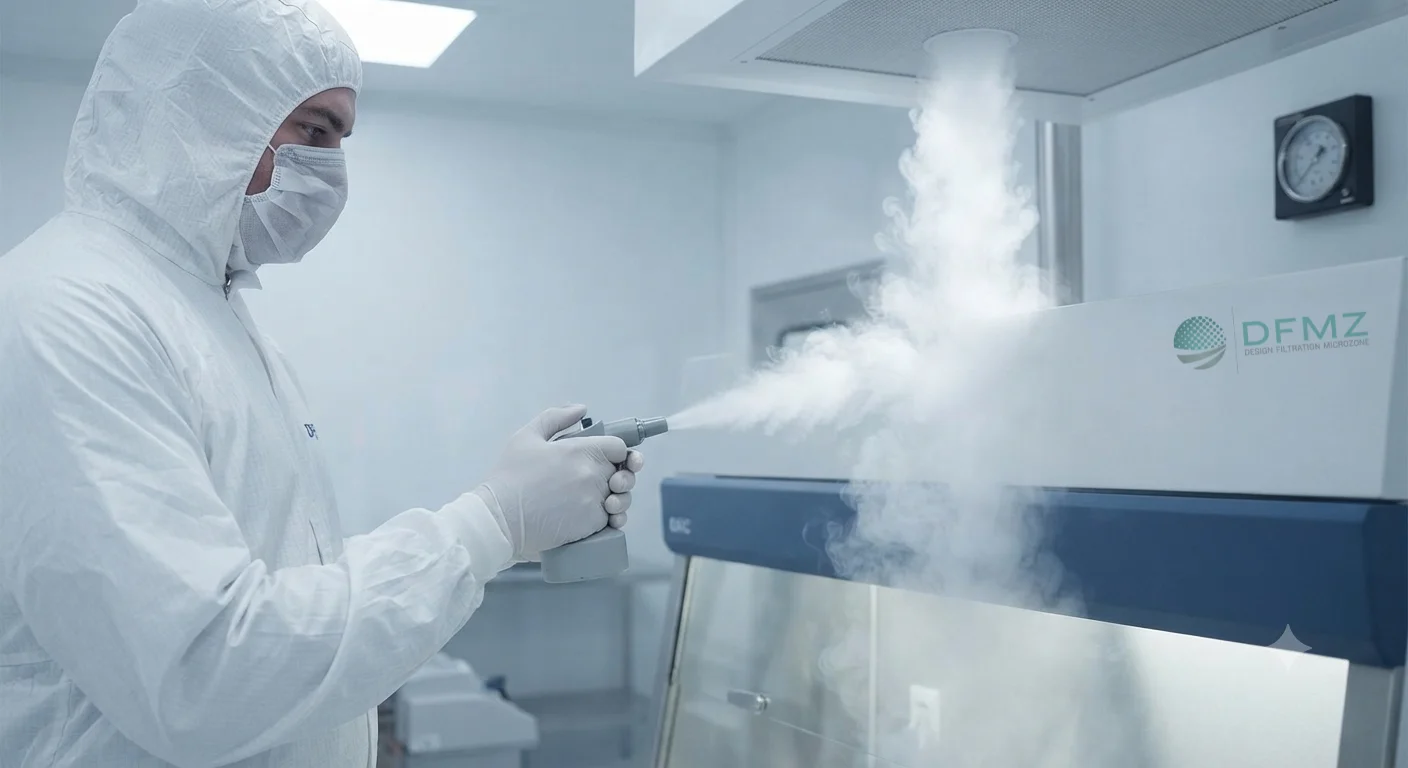
USP 797 saw some of its biggest changes yet. Cleanroom classification requirements are now tied more precisely to the category of compounding performed, with clearer expectations around ISO classification, pressure relationships, and air changes per hour. Environmental monitoring has to happen on a defined schedule, and dynamic certification testing, which measures a room's actual performance while it is in use rather than at rest, is now formally required. Garbing order, hand hygiene, and cleaning and disinfection practices are also considerably more specific than in earlier versions.
Why This Matters If You're Also Working Under USP 800
Because hazardous drug compounding so often happens in spaces already governed by 795 or 797, the tightened engineering control and documentation requirements in those chapters end up reinforcing USP 800 compliance almost by default. Better-defined containment expectations mean fewer gray areas when you're specifying a hazardous drug enclosure, and the added emphasis on training and monitoring lines up closely with what USP 800 already expects for exposure prevention.
Where the Three Chapters Overlap
In day-to-day operations, the lines between these chapters blur more than the numbering suggests. A handful of requirements show up across all three:
- Airflow and pressure control: Directional airflow, pressure differentials, and room classification all matter whether you are managing sterility risk or containment risk.
- Garbing and hygiene: Protective apparel and hand hygiene protocols serve both contamination control and worker safety goals at once.
- Environmental monitoring: Routine air and surface sampling is expected regardless of which chapter governs the room.
- Containment strategy: Once hazardous drugs enter the picture, all three chapters reinforce the need for engineering controls that physically separate the operator from the drug.
Knowing where the requirements diverge matters just as much. USP 795 and 797 are split by compounding type, non-sterile versus sterile, while USP 800 is organized around exposure risk instead. A room can be fully 797-compliant and still fall short of 800 if it wasn't designed with hazardous drug containment in mind from the start.
Deciding Whether to Upgrade or Rebuild
A few signals tend to push facilities toward a renovation or a new build rather than a patch job: a jump in compounding volume, a new hazardous drug entering the workflow, or an existing room that simply can't hit the airflow, pressure, or containment numbers the updated chapters call for. Before committing to a rebuild, it's worth walking through:
- Whether current engineering controls and room layout still match the compounding categories being performed
- How recently the space was certified, and whether monitoring has been happening on the required schedule
- Whether SOPs, training records, and documentation would hold up under review today
Facilities moving from 797-only compliance toward full 800 alignment often find that the gap is not on the sterile compounding side at all. It is in containment: the enclosure itself, the exhaust path, and how hazardous materials move through the room.
Biological safety cabinet vs. containment fume hood: which one does 800 actually require?
A straightforward breakdown of airflow, filtration, and exposure protection to help you match the enclosure to the drug.
How DFMZ Supports 795, 797 & 800 Compliance
DFMZ designs and builds the containment equipment these chapters revolve around, including biological safety cabinets, fume hoods, fan filter units, and custom enclosures engineered around the airflow, pressure, and filtration requirements each chapter sets. Our engineering team works with pharmacy and health system facilities from initial spec through certification, so the enclosure and the room around it are designed together rather than reconciled after the fact.
Beyond the initial build, DFMZ supports facilities through the ongoing side of compliance too, including recertification, filter replacement programs, and design consultations as compounding volume or drug categories change. If your current space was designed against an older version of these standards, that's usually the right place to start the conversation.
Planning a compounding room build or upgrade?